Our approach
The seven areas of learning
Our curriculum is anchored in the EYFS framework, which identifies seven interconnected areas of learning. Our team prepares indoor and outdoor learning environments to make each area as engaging as possible for the children. Every activity is designed with a clear educational purpose, even when it feels like pure fun to the children.
Individual care at the core
We know that no two children are alike. Every child who walks through our door brings their own personality, pace, interests, and needs. At Bushbabies, we focus on individual strengths and challenges, tailoring our approach to ensure each child is supported exactly where they need it and encouraged in the areas where they are ready to grow. Through individual observation and partnership with families, we ensure every child feels celebrated. We use a leading online learning journal to document individual progress and share regular observations, keeping parents connected to their child’s learning journey.
(01)
Personal, social, and emotional development
This area fosters self-confidence, self-awareness, and the ability to form positive relationships. Children learn to understand and manage their feelings, develop empathy, and build the social skills that underpin all future learning.
(01)
Personal, social, and emotional development
This area fosters self-confidence, self-awareness, and the ability to form positive relationships. Children learn to understand and manage their feelings, develop empathy, and build the social skills that underpin all future learning.
(02)
Communication and language
Communication and language underpin a child’s ability to understand, speak, listen, and pay attention. They are the gateway to literacy and to every meaningful interaction a child will have.
(02)
Communication and language
Communication and language underpin a child’s ability to understand, speak, listen, and pay attention. They are the gateway to literacy and to every meaningful interaction a child will have.
(03)
Physical development
Physical development encompasses both large movements and fine motor control, alongside an understanding of health and self-care. Strong physical development gives children the tools to explore, create, and engage fully with the world.
(03)
Physical development
Physical development encompasses both large movements and fine motor control, alongside an understanding of health and self-care. Strong physical development gives children the tools to explore, create, and engage fully with the world.
(04)
Literacy
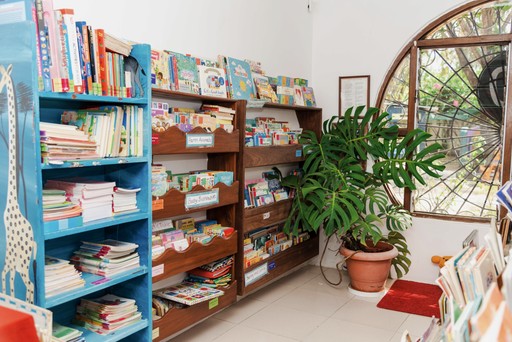
Literacy is the foundation for learning to read and write. At Bushbabies, we immerse children in a print-rich environment and foster a genuine love of stories, words, and mark-making long before formal reading begins.
(04)
Literacy
Literacy is the foundation for learning to read and write. At Bushbabies, we immerse children in a print-rich environment and foster a genuine love of stories, words, and mark-making long before formal reading begins.
(05)
Mathematics
At this age, mathematics is about developing an intuitive understanding of numbers, shapes, space, patterns, and measurement through meaningful, everyday experiences.
(05)
Mathematics
At this age, mathematics is about developing an intuitive understanding of numbers, shapes, space, patterns, and measurement through meaningful, everyday experiences.
(06)
Understanding the world
This area helps children make sense of the people, communities, and environments around them, as well as of the natural world and technology.
(06)
Understanding the world
This area helps children make sense of the people, communities, and environments around them, as well as of the natural world and technology.
(07)
Expressive arts and design
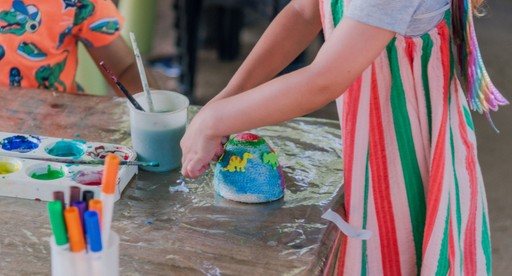
Expressive arts and design nurture imagination, creativity, and the ability to communicate through multiple forms of expression – from painting and drawing to music, dance, construction, and role-play.
(07)
Expressive arts and design
Expressive arts and design nurture imagination, creativity, and the ability to communicate through multiple forms of expression – from painting and drawing to music, dance, construction, and role-play.
Deepening our practice
While EYFS provides our curricular structure we enrich it by drawing on leading international early years traditions. We embrace the principle that children are naturally curious, capable learners who thrive when given the freedom to explore at their own pace. Our environment invites children to make choices, develop concentration, and build independence – essential life skills that begin here in the early years.
Deepening our practice
While EYFS provides our curricular structure we enrich it by drawing on leading international early years traditions. We embrace the principle that children are naturally curious, capable learners who thrive when given the freedom to explore at their own pace. Our environment invites children to make choices, develop concentration, and build independence – essential life skills that begin here in the early years.
Beyond Reception
In Year 1, we begin to align with the learning outcomes of the British National Curriculum, while maintaining the core principles that define learning at Bushbabies. This transition is continuation of our approach, ensuring that each child’s learning journey remains responsive to their individual development. Children are supported to think critically, make connections, and take ownership of their learning. Through a balance of individualised teaching, small-group learning, and guided experiences, we ensure that children are both supported and appropriately challenged as they progress.
Beyond Reception
In Year 1, we begin to align with the learning outcomes of the British National Curriculum, while maintaining the core principles that define learning at Bushbabies. This transition is continuation of our approach, ensuring that each child’s learning journey remains responsive to their individual development. Children are supported to think critically, make connections, and take ownership of their learning. Through a balance of individualised teaching, small-group learning, and guided experiences, we ensure that children are both supported and appropriately challenged as they progress.
In practice
How children learn: characteristics of effective learning
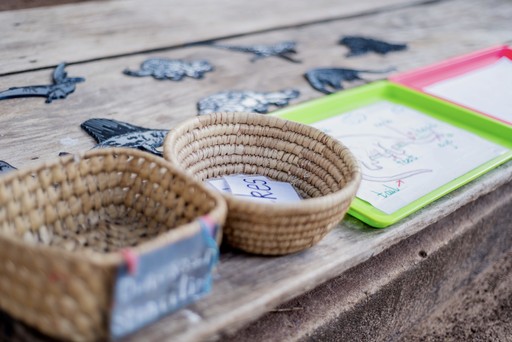
We believe that play is how young children learn best. At Bushbabies, every moment of play is purposeful and directly informed by our understanding of the EYFS Characteristics of Effective Learning. These characteristics describe not what children learn but how they learn.
Whether a child is mixing paint colours, acting out a favourite story, investigating shadows with a torch, or cooking in the mud kitchen, they are developing skills that will serve them throughout their education and beyond.
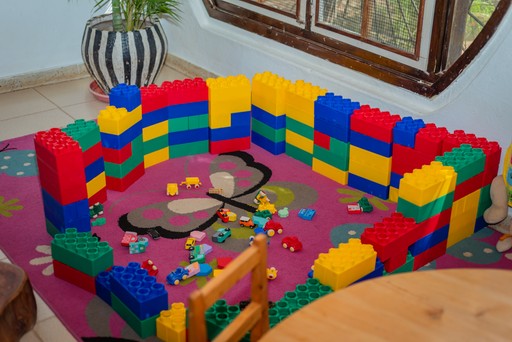
Engagement: playing and exploring
Children explore their world, play with what they know, and show a willingness to try. We create an environment where curiosity is celebrated and children feel safe to take risks and try new things.
(01)
Engagement: playing and exploring
Children explore their world, play with what they know, and show a willingness to try. We create an environment where curiosity is celebrated and children feel safe to take risks and try new things.
Motivation: active learning
Children concentrate deeply, keep trying when things are difficult, and take genuine pride in what they achieve. Our teachers know when to step in with support and when to step back and let determination take its course.
(02)
Motivation: active learning
Children concentrate deeply, keep trying when things are difficult, and take genuine pride in what they achieve. Our teachers know when to step in with support and when to step back and let determination take its course.
Thinking: creating and critical reasoning
Children develop their own ideas, make connections between experiences, and choose their own ways of doing things. We provide provocations and open-ended resources that encourage children to think, problem-solve, and innovate.
(03)
Thinking: creating and critical reasoning
Children develop their own ideas, make connections between experiences, and choose their own ways of doing things. We provide provocations and open-ended resources that encourage children to think, problem-solve, and innovate.
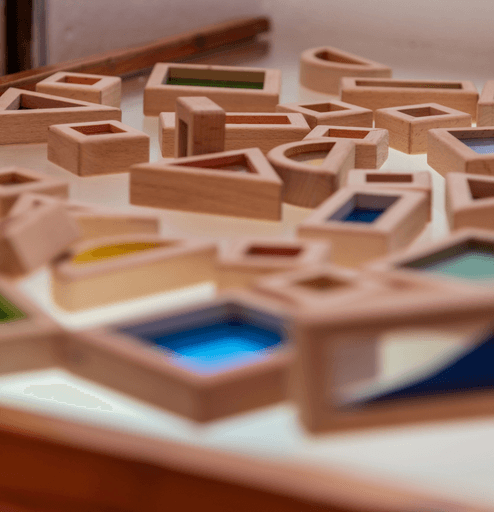
Case Study for Kombawadogo Class (15 months to 3 years) Testing Ideas Through Play
This Child is testing his ideas today and sets himself a goal during play. In the construction area, he builds a vehicle using giant Duplo blocks. He carefully carries his vehicle up the steps of the small slide and slowly lets go, watching it travel down. Pleased with the result, he repeats this action several times, showing curiosity and persistence. He then moves to the puzzle table, selects a wooden vehicle from the inset puzzle, and follows the same steps. This time, because the vehicle has no wheels, he experiments by sliding it along with him, testing how it moves differently. Through this planned exploration, the Child is developing early technology skills, critical thinking, and problem-solving. His repeated testing builds confidence and supports his growing sense of self-esteem as he sees his ideas work in different ways.
Case Study for Kombawadogo Class (15 months to 3 years) Testing Ideas Through Play
This Child is testing his ideas today and sets himself a goal during play. In the construction area, he builds a vehicle using giant Duplo blocks. He carefully carries his vehicle up the steps of the small slide and slowly lets go, watching it travel down. Pleased with the result, he repeats this action several times, showing curiosity and persistence. He then moves to the puzzle table, selects a wooden vehicle from the inset puzzle, and follows the same steps. This time, because the vehicle has no wheels, he experiments by sliding it along with him, testing how it moves differently. Through this planned exploration, the Child is developing early technology skills, critical thinking, and problem-solving. His repeated testing builds confidence and supports his growing sense of self-esteem as he sees his ideas work in different ways.
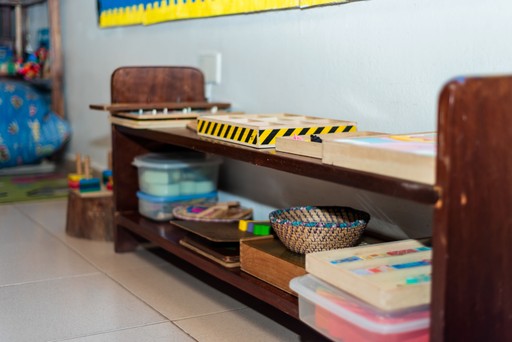
Case Study for the Kombakati class (3 to 4 years) Rescue the Fish!
We have been exploring water, and today we are doing a “Rescue the Fish” activity. The play fish are frozen inside ice blocks, and have to be rescued using different tools such as a hammer, pebbles, lukewarm water, and salt. The Child is very focused during the activity. He tries out all the tools, using both the hammer and the rocks to help free his fish. After some careful smashing and pouring, he successfully removes his fish and proudly says, “I removed my fish!” He then gathers all the rescued fish and places them into the jug before saying, “I’m done,” showing that he understands the task and completes it with confidence. Through this experience, the Child learns how ice changes when we use different tools and materials. He develops his physical skills as he handles the hammer and rocks with control, and he uses clear language to express what he is doing. This activity also supports his curiosity, problem-solving, and understanding of cause and effect.
Case Study for the Kombakati class (3 to 4 years) Rescue the Fish!
We have been exploring water, and today we are doing a “Rescue the Fish” activity. The play fish are frozen inside ice blocks, and have to be rescued using different tools such as a hammer, pebbles, lukewarm water, and salt. The Child is very focused during the activity. He tries out all the tools, using both the hammer and the rocks to help free his fish. After some careful smashing and pouring, he successfully removes his fish and proudly says, “I removed my fish!” He then gathers all the rescued fish and places them into the jug before saying, “I’m done,” showing that he understands the task and completes it with confidence. Through this experience, the Child learns how ice changes when we use different tools and materials. He develops his physical skills as he handles the hammer and rocks with control, and he uses clear language to express what he is doing. This activity also supports his curiosity, problem-solving, and understanding of cause and effect.
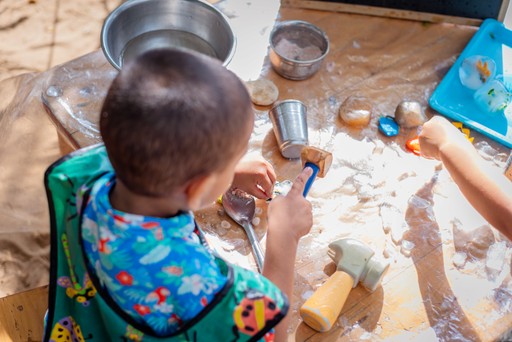
Case Study for Kombakubwa Class (4 to 6 years) Exploring Planets in Our Mini Galaxy
The Child was actively engaged in a planet survey activity, using a glass to carefully explore a “space scene” created with water, paint and glitter. As she searched through her miniature galaxy, she thoughtfully looked for the different planets and ticked them off on her survey checklist as she found them. As the Child spotted planets within the swirling mixture, she compared what she could see through the glass with the pictures on her checklist, encouraging her to look closely at visual details and match what she observed with the recorded images. Through this process she was strengthening her observation skills and ability to recognise and identify different planets. Throughout the activity, the Child was able to revisit and consolidate her knowledge of the planets she has been learning about in class, while also developing her problem-solving skills and curiosity as she explored the activity in an interactive, hands-on way. Her focused engagement showed how meaningful learning can take place when children are given opportunities to investigate ideas through play and exploration.
Case Study for Kombakubwa Class (4 to 6 years) Exploring Planets in Our Mini Galaxy
The Child was actively engaged in a planet survey activity, using a glass to carefully explore a “space scene” created with water, paint and glitter. As she searched through her miniature galaxy, she thoughtfully looked for the different planets and ticked them off on her survey checklist as she found them. As the Child spotted planets within the swirling mixture, she compared what she could see through the glass with the pictures on her checklist, encouraging her to look closely at visual details and match what she observed with the recorded images. Through this process she was strengthening her observation skills and ability to recognise and identify different planets. Throughout the activity, the Child was able to revisit and consolidate her knowledge of the planets she has been learning about in class, while also developing her problem-solving skills and curiosity as she explored the activity in an interactive, hands-on way. Her focused engagement showed how meaningful learning can take place when children are given opportunities to investigate ideas through play and exploration.
Our outdoor environment
Where a giant bamboo tree becomes a library, a mud kitchen becomes a space to cook up delectable delights, and every corner of the garden becomes a classroom
At Bushbabies, the outdoors is a core element of the school day. Our secure, enclosed garden is a carefully designed extension of the indoor learning environment, offering children rich, sensory, open-ended experiences centred on natural materials that simply cannot be replicated within four walls. With Dar es Salaam’s wonderful climate on our side and generous shade throughout, children spend a substantial part of their day learning, exploring, and playing outside.
We believe that outdoor play is essential to every aspect of a child’s development. It invites imaginative play, collaboration, and risk-taking, fostering a sense of freedom and stimulation. It also supports emotional well-being, giving children the space, fresh air, and sensory stimulation they need to feel calm, focused, and happy. Each feature of our outdoor space has been thoughtfully designed with these goals in mind.
Mud kitchen
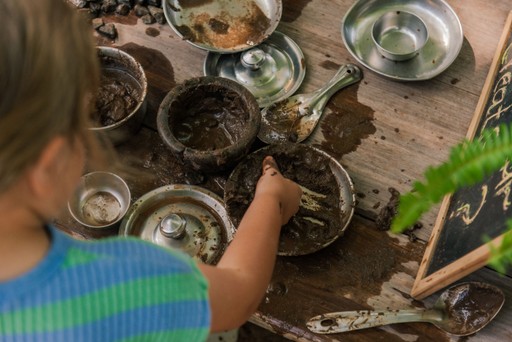
The mud kitchens are among the most popular spaces in the garden. Equipped with spoons, pots, and bowls, children create elaborate recipes, experiment with textures (soft, wet mud versus dry, crumbly earth), and lose themselves in rich imaginative play. Mud kitchens promote language development, mathematical thinking, creativity, and social skills, all while children simply have tremendous fun.
Mud kitchen
The mud kitchens are among the most popular spaces in the garden. Equipped with spoons, pots, and bowls, children create elaborate recipes, experiment with textures (soft, wet mud versus dry, crumbly earth), and lose themselves in rich imaginative play. Mud kitchens promote language development, mathematical thinking, creativity, and social skills, all while children simply have tremendous fun.
Reading tree
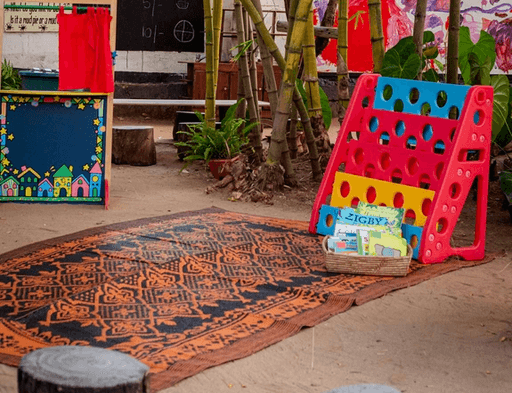
One of our outdoor libraries sits beneath a giant bamboo tree, a peaceful, shaded spot where children can settle on tree stumps or a soft carpet to enjoy a book beneath the arching branches and leaves. It is a favourite quiet retreat, nurturing a love of stories and giving children the chance to choose their own reading.
Reading tree
One of our outdoor libraries sits beneath a giant bamboo tree, a peaceful, shaded spot where children can settle on tree stumps or a soft carpet to enjoy a book beneath the arching branches and leaves. It is a favourite quiet retreat, nurturing a love of stories and giving children the chance to choose their own reading.
Pebble pit
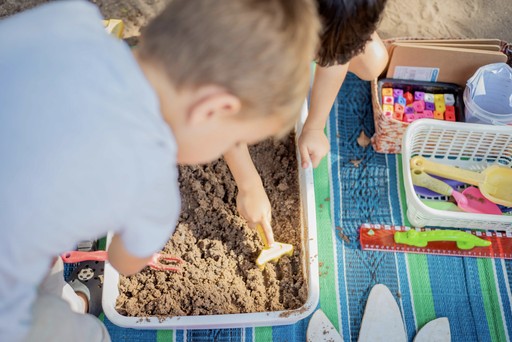
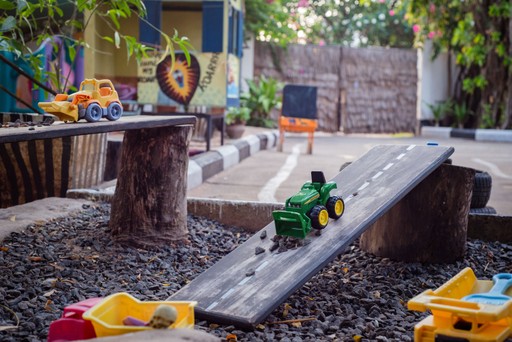
Our purpose-built pebble pit provides children with a tactile, open-ended space for digging, scooping, transporting, and imaginative small-world play with trucks and tools. Pebbles offer a different sensory experience to sand, and children love experimenting with how these materials behave.
Pebble pit
Our purpose-built pebble pit provides children with a tactile, open-ended space for digging, scooping, transporting, and imaginative small-world play with trucks and tools. Pebbles offer a different sensory experience to sand, and children love experimenting with how these materials behave.
Construction area
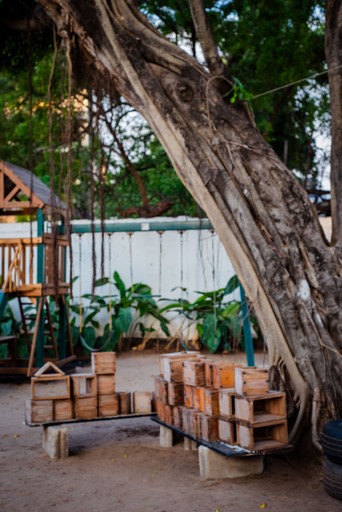
A construction area is set up daily, stocked with Lego, Duplo, handmade bamboo cylinders, and wooden blocks. Children explore building with various materials and shapes, developing their creativity, fine motor skills, and problem-solving as they design and build freely.
Construction area
A construction area is set up daily, stocked with Lego, Duplo, handmade bamboo cylinders, and wooden blocks. Children explore building with various materials and shapes, developing their creativity, fine motor skills, and problem-solving as they design and build freely.
Water wall
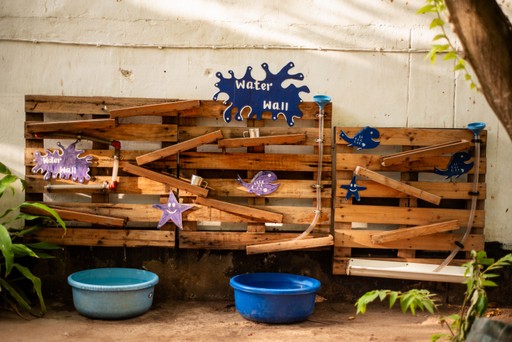
Our mounted water wall is a hub of scientific discovery. Children test volume, transport water, and observe how it flows and moves the wheels it passes through. By mounting the wall, we have freed up ground space for children to move freely while still providing a space for hands-on exploration of concepts such as flow, cause and effect, and early measurement, all through child-led play.
Water wall
Our mounted water wall is a hub of scientific discovery. Children test volume, transport water, and observe how it flows and moves the wheels it passes through. By mounting the wall, we have freed up ground space for children to move freely while still providing a space for hands-on exploration of concepts such as flow, cause and effect, and early measurement, all through child-led play.
Trunks, stumps, and the jungle gym
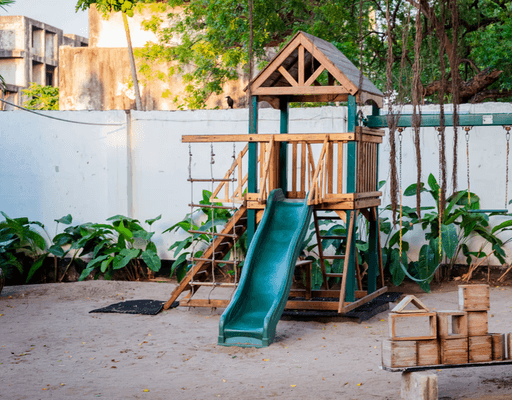
Our stepping stumps create natural pathways for balance and physical development, while a glade in the centre of our garden and a tree-trunk jungle gym offer opportunities for climbing, jumping, and imaginative adventure.
Trunks, stumps, and the jungle gym
Our stepping stumps create natural pathways for balance and physical development, while a glade in the centre of our garden and a tree-trunk jungle gym offer opportunities for climbing, jumping, and imaginative adventure.